

A dysregulated nervous system often shows up quietly, in ways the mind barely notices but the body feels acutely. A subtle tension in the shoulders that never fully relaxes, a racing heart that won’t settle, a stomach that churns for no apparent reason—these are not just random aches. They are the physical symptoms of nervous system dysregulation, signals that the body is stuck on alert even when there’s no immediate danger.
People carry these signals like uninvited companions. Sometimes they show up in bursts, like a sudden panic when the phone rings, revealing that the dysregulated nervous system is quietly on high alert. Sometimes they hum quietly, an undercurrent of unease shaping posture, mood, and sleep, symptoms of a dysregulated nervous system that most people overlook. It’s not that the mind is weak; the body is simply stuck in a loop it doesn’t know how to exit—a loop created by a dysregulated nervous system struggling to reset itself.
What Is Nervous System Dysregulation?
At its core, nervous system dysregulation occurs when the balance between the sympathetic nervous system—the body’s fight-or-flight engine—and the parasympathetic system, which should calm things down, goes off. The body becomes overly sympathetic, alert even when there’s no immediate danger.
Imagine a car stuck in first gear, revving unnecessarily, tires spinning in place. That’s what it feels like from the inside. Trauma, chronic stress, or long-standing anxiety can push the system into this state. And the longer it stays there, the more the body learns to see threats everywhere—even subtle, everyday things that are actually harmless.
For more in-depth information about trauma-driven nervous system responses, the National Center for PTSD provides research-backed insights into how stress and trauma shape autonomic nervous system function.
Emotional and Cognitive Clues (Dysregulated Nervous System Symptoms)
Before the physical signs fully settle in, the emotional and cognitive ones often surface. Irritability that feels out of proportion. Thoughts that refuse to settle, like the mind itself is pacing in a small cage. A heightened sense of alertness, sometimes paired with guilt for feeling keyed up over nothing.
These aren’t just “in the head” either. They bleed into muscles, organs, and even cellular patterns. Emotional tension shows up in heart rate, breathing, digestion, and the tiniest reflexes. Sometimes it’s almost invisible—someone seems calm, but their body is humming with energy that can’t quite find a release.
Physical Symptoms of Nervous System Dysregulation
And then, of course, the body begins to speak in its own language. These physical symptoms of nervous system dysregulation are varied, sometimes subtle, sometimes glaringly obvious.
Cardiovascular Signs
Palpitations. Spikes in heart rate without exertion. Occasional dizziness or faintness. The heart seems to drum its own rhythm, oblivious to attempts to soothe it. For a deeper dive into how trauma impacts the heart, see the NIH Autonomic Nervous System overview.
Respiratory Signals
Shortness of breath. Shallow, almost reflexive breathing. Chest tightness that isn’t a heart attack but feels like one. Each breath a reminder that the body is perpetually on edge.
Digestive Distress
The gut is particularly vulnerable. Nausea, bloating, unpredictable bowel patterns. The intestines, in conversation with the nervous system, mirror the tension elsewhere in the body. Stress isn’t just mental—it’s visceral.
Musculoskeletal Tension
Muscles tighten without warning. Shoulders lift unconsciously, jaws clench, backs stiffen. Even minor movement can feel loaded. Tremors, occasional twitches—small signs of a nervous system that refuses to rest.
Sleep and Fatigue
Sleep can be a betrayal. Nights spent staring at the ceiling while the body refuses to recognize safety. Daytime fatigue that seems to mock attempts at normalcy. The nervous system, locked in sympathetic overdrive, sabotages recovery.
Sensory Sensitivity
The lights are too bright, the sounds too sharp. Sudden noises trigger startling reactions. The nervous system becomes hyper-attuned, scanning for threats that aren’t there.
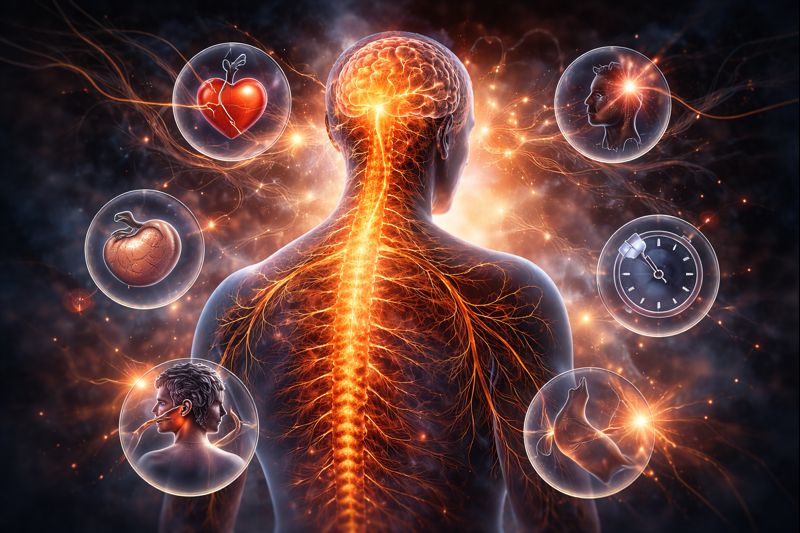
Why These Symptoms Happen
The nervous system is designed to protect. But trauma, persistent stress, or repeated minor threats teach it to misfire. The body anticipates danger that no longer exists, or overestimates it. This isn’t weakness; it’s biology.
It’s also why traditional approaches that address only the mind sometimes fail. Emotional insights alone cannot reset a system that has learned its own hyper-alert patterns. The body and brain must recalibrate together. Emerging therapies, like the Stellate Ganglion Block pioneered by Dr. Eugene Lipov, aim to do just that—targeting the nervous system to reset its balance.
When to Seek Professional Help
Not every twinge or anxious thought signals dysregulation, of course. But persistent or worsening symptoms of a dysregulated nervous system warrant attention. Professionals familiar with trauma-informed approaches, like PTSI-aware clinicians, can help distinguish ordinary stress from deeper dysregulation. Asking clear questions—about sleep, digestion, muscle tension, and startle response—can guide appropriate treatment or intervention.
Subtle Practices That Support Regulation
Even before professional treatment, small interventions can help the body find micro-moments of calm. Gentle breathing exercises, mindful awareness, slow stretches, and safe movement may signal to the nervous system that the environment is not threatening. They don’t undo trauma, but they whisper to the body that rest is possible.
It’s not dramatic. No magic wand. Just consistent, subtle reminders that safety exists in real time. And sometimes that’s enough to break a tiny fragment of the loop, to give the nervous system a chance to exhale.
A Soft Reminder
These physical symptoms of nervous system dysregulation are not signs of weakness or fragility. They are the body’s honest, biological responses to stress and trauma. A silent alarm that has learned to stay on too long. Recognition is the first step. Understanding follows. And with the right guidance—be it therapeutic interventions, lifestyle adjustments, or advanced biological approaches like Dual Sympathetic Reset—the system can recalibrate.
It’s a slow conversation with the body. But one that, eventually, can be heard.
Learn More:
- Stellate Ganglion Block
- Dual Sympathetic Reset
- PTSD Nervous System Treatment
- phq9 patient health questionnaire
- PCL-5 PTSD Assessment Form
- Pre-Visit Questionnaire
- Podcast Guest Intake Form
- Join Update List
External References:
- NIH – Autonomic Nervous System Overview
- National Center for PTSD – Symptoms Overview
- The Body’s Silent Alarm: 7 Major Physical Symptoms of a Dysregulated Nervous System
- From Combat to Calm: The Breakthrough Nerve Block Changing Veteran PTSD Care
- PTSD Nervous System Treatment: How Trauma Locks the Body in Fight-or-Flight and Why PTSI Matters
- Post‑Traumatic Stress Injury Revealed: Trauma Therapy with SGB & Dual Sympathetic Reset