




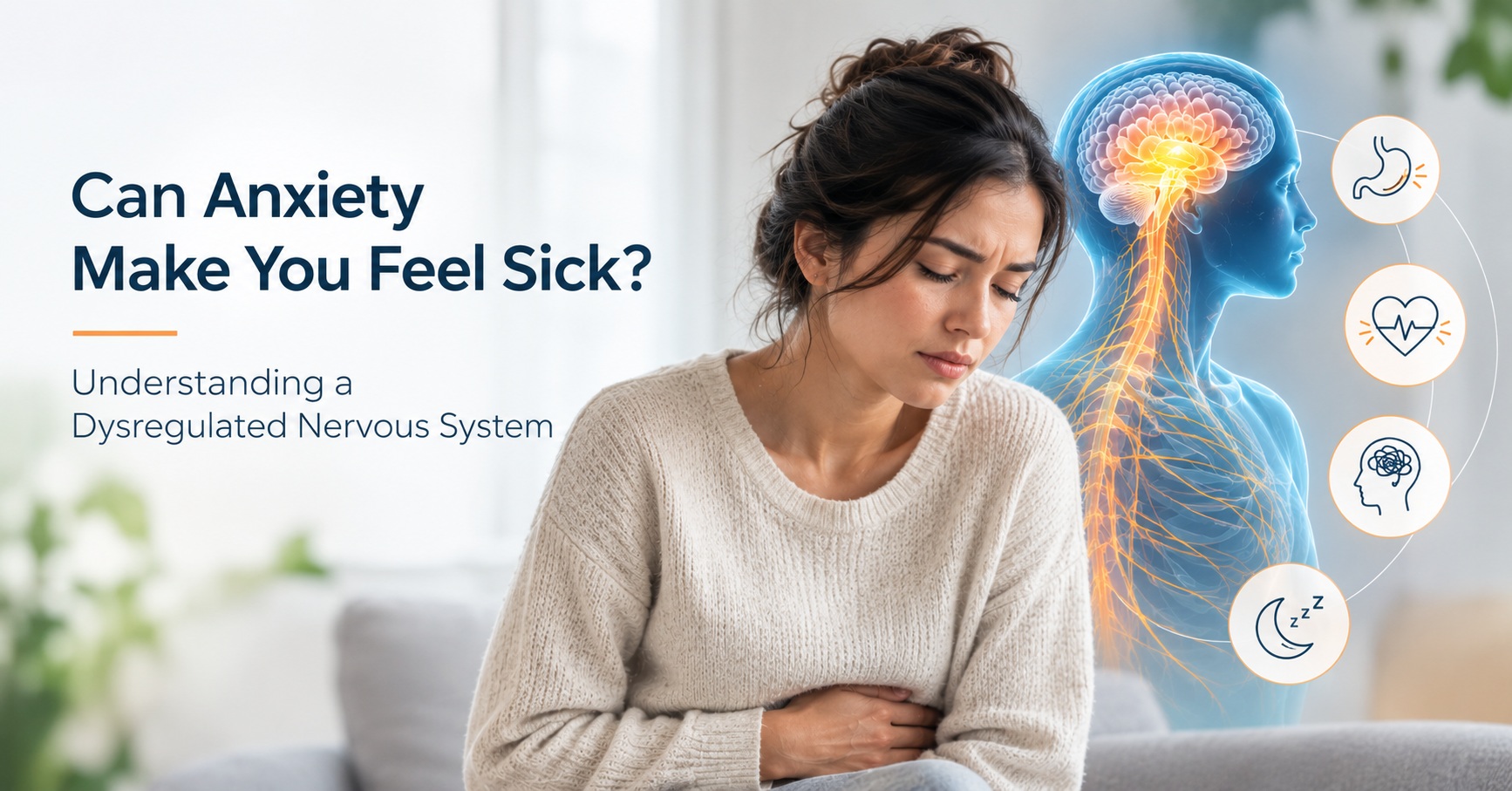
A dysregulated nervous system could affect the body’s reaction to stress and anxiety. Anxiety that affects the body can feel entirely different from simple worries. Physical symptoms like nausea, abdominal problems, racing heartbeats, lightheadedness, tight muscles, fatigue, or insomnia can be experienced due to anxiety.
So, can anxiety make you feel sick? Yes. Stress and anxiety can cause physical changes in the body. Knowing more about the link between anxiety and the nervous system may help clarify why emotional stress could create very real physical effects.
How Can Anxiety Make You Feel Sick?
Anxiety triggers stress responses in the body, including the sympathetic nervous system, which is involved in helping the body cope with the threat of perceived danger via the “fight or flight” mechanism.
In cases where there is persistent stress, some people could continue experiencing physical effects even when there is no danger at hand. Some of these include:
- Nausea or stomach distress
- Rapid or heavy heartbeat
- Muscle tension
- Dizziness or light-headedness
- Appetite changes
- Fatigue
- Insomnia
- Feeling hyper vigilant or “on edge”
Also, the National Center for PTSD explains physical responses to stress and trauma like stomach upset, difficulty eating, rapid breathing, heavy or fast heartbeat, shakiness, sweating, and tiredness.
However, these symptoms can have many possible causes. Persistent, severe, or unexplained symptoms should always be discussed with an appropriate healthcare professional.
What is a Dysregulated Nervous System?
The phrase dysregulated nervous system has frequently been used to indicate the inability to return to a calmer state when experiencing stress or feeling threatened.
Rather than being able to go back and forth between activation and relaxation states, one may find themselves in an “on guard” state. Other symptoms that may accompany a dysregulated nervous system include increased alertness, insomnia, anxiety, and bodily tension.
Ongoing stress responses may also occur as a result of trauma. The National Center for PTSD indicates that a constantly vigilant state, startle responses, insomnia, and physical symptoms may occur following a traumatic experience.
What is Dual Sympathetic Reset?
Dual Sympathetic Reset (DSR) is a procedure linked to the research of Dr. Eugene Lipov regarding the sympathetic nervous system and trauma physiology.
According to information published by Dr. Lipov, the concept of DSR evolved from his work with SGB and focuses on the body’s fight-or-flight response.
Learn about Dual Sympathetic Reset .
Dr. Eugene Lipov and the Nervous System
Dr. Eugene Lipov is a board-certified doctor who conducts research related to trauma and the sympathetic nervous system. This information can be found on his website as part of the Dr. Eugene Lipov’s work on trauma and the nervous system section, which describes SGB and DSR.
If stress, anxiety, or trauma-related issues are impacting your everyday life, knowledge about the link between the brain, the body, and the nervous system can be essential for discussion of possible ways of dealing with such problems with a doctor.
Final Thoughts
Anxiety is not only an emotional experience. Some people might experience stress physically, as well. Stomachache, fast heart rate, tiredness, sleep problems are among such physical manifestations.
If you have any persistent symptoms, consider conducting an appropriate medical examination instead of concluding that anxiety is the problem. More information about trauma-related physical reactions is provided at the National Center for PTSD’s guide to common reactions after trauma.