




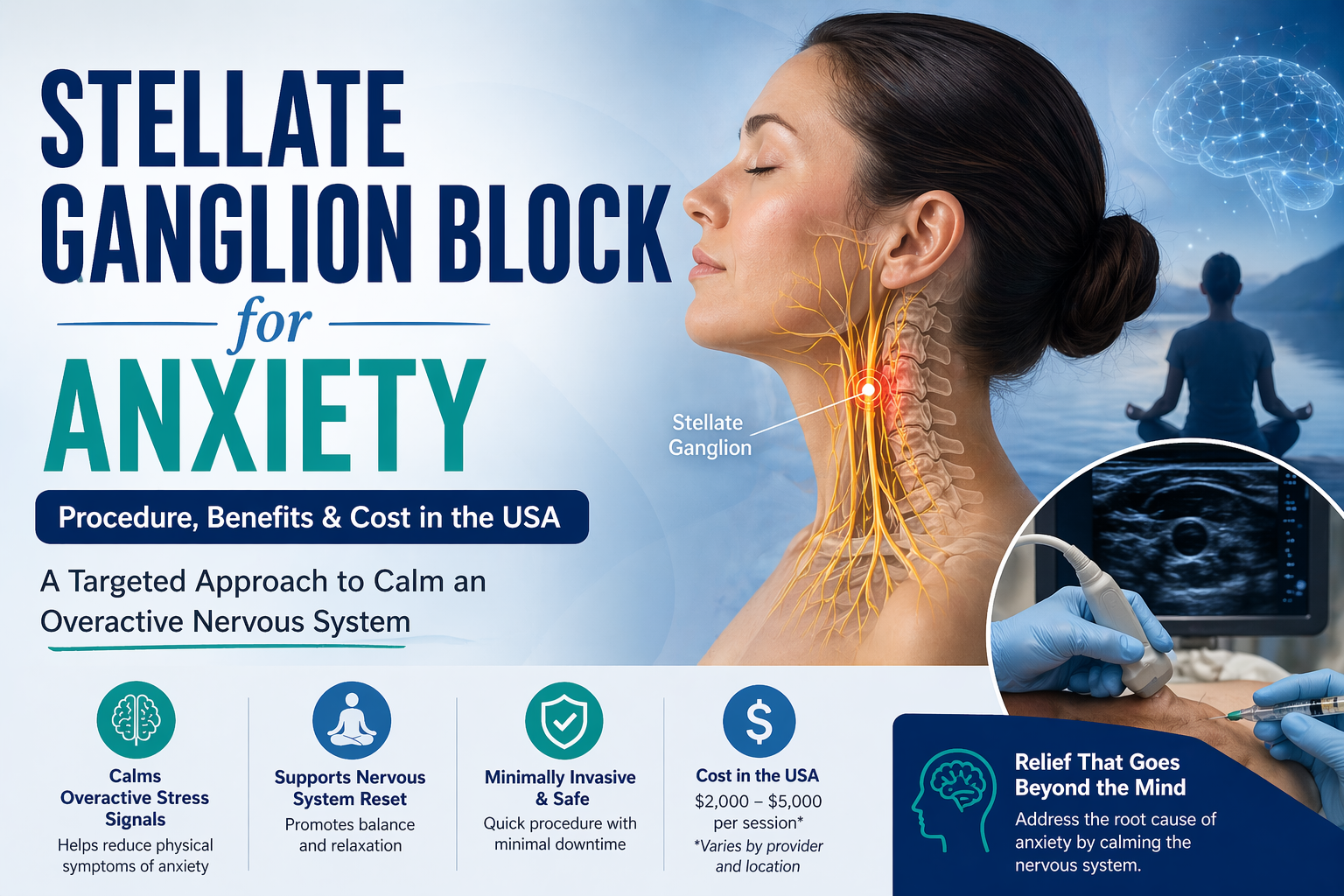
Symptoms associated with anxiety and trauma may interfere with sleeping, focusing, and other areas of daily life. There is one medical procedure currently being looked at is called “stellate ganglion block for anxiety.” The process involves the administration of a local anesthetic to a collection of nerves in the neck area.
Research has focused on the benefits of SGB when treating PTSD. However, research is limited, and it is not a cure-all for all types of anxiety disorders. The following guide will explore the procedure itself, risks, research findings, and “stellate ganglion block cost in the USA.”
What Is a Stellate Ganglion Block?
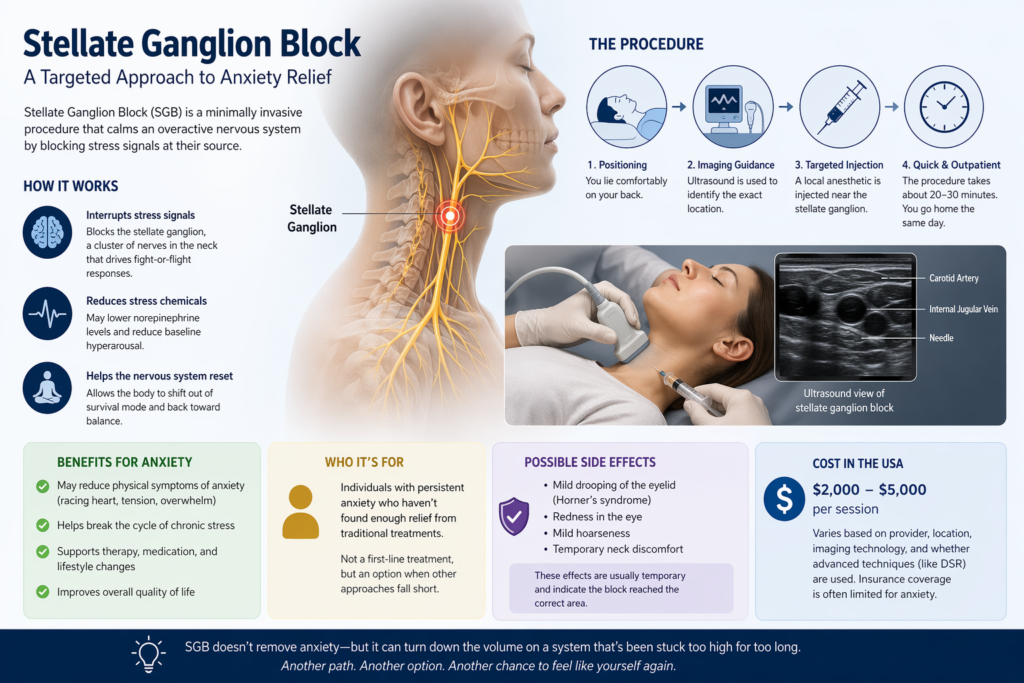
Stellate ganglion block is a medical procedure in which an injection is made into a cluster of sympathetic nerves located in the lower neck. Sympathetic nerves are part of the autonomic nervous system that regulates involuntary functions of the body.
During the process, ultrasound and/or fluoroscopy is used to help direct the needle to the right spot. An anesthetic is injected near the targeted nerves and blocks certain nerve transmissions.
Read more about the Stellate Ganglion Block from the Cleveland Clinic’s guide.
How Does Stellate Ganglion Block for Anxiety Work?
The sympathetic nervous system allows the body to react to threats. People suffering from trauma-related issues might have persistent hyperarousal. It can be characterized by increased vigilance or a racing heart.
Scientists have studied if SGB can relieve some of the symptoms of PTSD. The problem is that anxiety has many roots, and different disorders require different treatment approaches.
It is important to remember that SGB is no panacea.
What Happens During the Procedure?
This procedure includes such steps as:
- Evaluation: The specialist assesses symptoms, medical history, medications, and possible complications.
2. Preparation: The patient gets into position, and the injection area is prepared.
3. Injection: With help of imaging techniques, the specialist directs a needle and injects local anesthetic.
4. Observation: The patient is observed for any adverse reaction.
Some temporary effects are eyelid drooping, constriction of the pupil, hoarseness of the voice, or warmth in the injection side. The specialist explains what to expect during the recovery.
For additional procedural information, see the American Society of Regional Anesthesia and Pain Medicine’s article on Stellate Ganglion Blocks.
Is Stellate Ganglion Block Safe?
As is true of all medical procedures, there are associated risks. Possible side effects include discomfort, bruising, changes to your voice, and trouble swallowing. Some serious risks may include bleeding, infection, nerve damage, and other complications related to adjacent structures.
It will depend on a variety of factors including your personal medical history, symptoms, and other risk factors as to whether or not you are an appropriate candidate for the treatment.
Who Might Consider This Treatment?
Selected patients who experience persistent symptoms of trauma, including PTSD, after an appropriate medical evaluation may consider SGB treatment. This treatment is not for every person that suffers from anxiety.
Your clinician should help you determine whether or not scientific literature supports SGB treatment for your particular diagnosis, as well as the possible benefits and other options for treatment. If you have a different type of anxiety, some possible treatments include psychotherapy or medications among others.
Visit NIMH for more information about Generalized Anxiety Disorders.
What Is Dual Sympathetic Reset?
The term “Dual Sympathetic Reset” is one that comes up in regards to sympathetic nervous system intervention, such as SGB treatment. The definition and protocol of DSR will differ.
Review the studies directly:
SGB remains an area of ongoing research and should not be presented as a guaranteed treatment for every form of anxiety.
About Dr. Eugene Lipov
Dr. Eugene Lipov is connected to clinics performing SGB therapy and treatment of trauma symptoms. To know more about his practice and offered services, you can go to his official website.
Explore Your Treatment Options
If you are looking into “stellate ganglion block for anxiety,” please consult a medical professional about your diagnosis, possible treatment options, risks, and costs.
For more details, refer to the contact page.