Insights aligned with Dr. Eugene Lipov’s clinical approach
Sarcopenia—the age-related loss of muscle mass and strength—is one of the most underestimated drivers of disability, cognitive decline, depression, and fall-related injuries in older adults. According to physicians such as Dr. Eugene Lipov, addressing sarcopenia is not optional; it is foundational to healthy aging, mental health, and nervous system regulation.
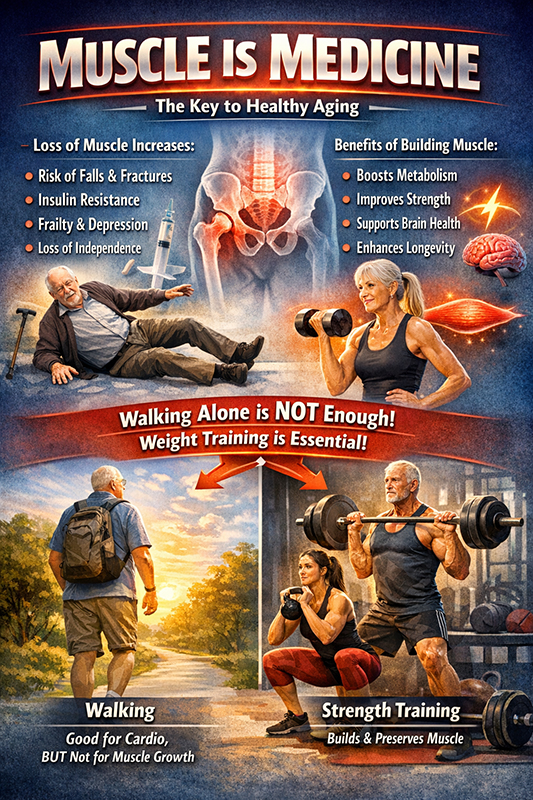
Muscle is not just for movement—it is a metabolic, neurological, and hormonal organ. Loss of muscle mass increases the risk of falls, broken hips, insulin resistance, frailty, depression, and loss of independence. Conversely, building and maintaining muscle reverses many age-related declines, even later in life.
Crucially, walking alone is not enough. While walking is excellent for cardiovascular health, it does not provide the mechanical load required to stimulate muscle growth. Weight-bearing and resistance training are essential to prevent and treat sarcopenia.
Dr. Lipov emphasizes that muscle must be strained to grow. This is a biological requirement.
Even in older adults, studies consistently show that strength training leads to real muscle growth, not just maintenance.
For people who struggle with traditional weightlifting, alternatives can still deliver powerful benefits:
Pool-Based Resistance
Chair Squats
Wall Squats (45 Degrees)
One of the most effective and accessible exercises:
This simple exercise alone can significantly reduce the risk of fall-related injuries and broken hips.
Muscle cannot grow without adequate protein intake. Older adults often consume far less protein than required for muscle maintenance.
Key points:
Dr. Lipov highlights creatine supplementation as one of the most evidence-based interventions for both physical and cognitive health.
Recommended Dose
Benefits of Creatine
Creatine is not just a “sports supplement”—it is a neuro-metabolic support compound with growing evidence in aging populations.
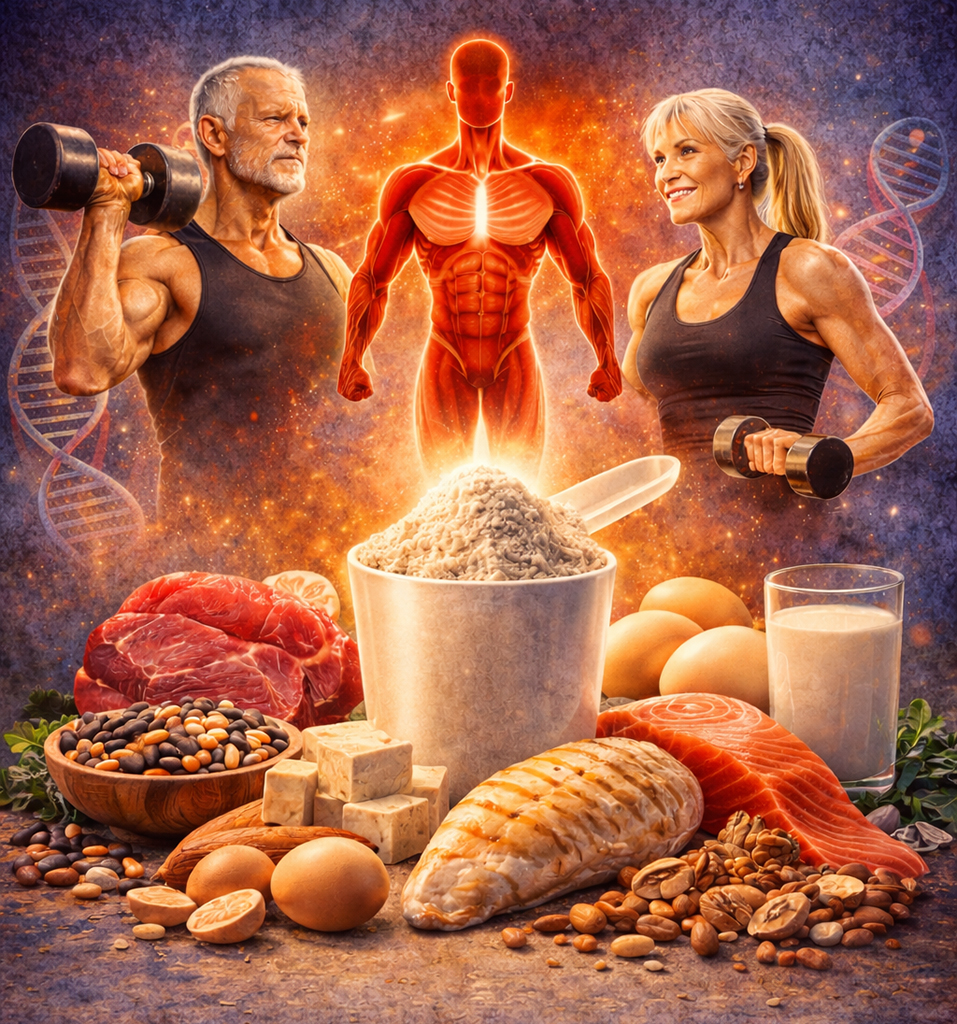
Muscle training directly influences the sympathetic nervous system, which is often overactive in depression, anxiety, PTSD, and chronic stress.
Dr. Lipov’s work has shown that:
In patients with severe sympathetic nervous system dysregulation, Stellate Ganglion Block (SGB) has been used as a treatment to reset autonomic balance. While SGB is a medical intervention, strength training complements nervous system regulation by restoring physical resilience and hormonal balance.
As muscle mass declines, so do anabolic hormones. Strength training helps reverse this process.
Sarcopenia is not an inevitable consequence of aging—it is a treatable condition.
To protect mobility, cognition, emotional health, and independence:
Building muscle is one of the most powerful, low-cost, evidence-based interventions available for aging well—physically, mentally, and emotionally.