





Hay momentos en que la ansiedad deja de sentirse como "preocupación" y se convierte en un ciclo repetitivo. El corazón acelera un poco. La respiración es superficial. El sueño, incluso cuando llega, no soluciona nada.
En ese espacio —silencioso, incómodo y a menudo incomprendido— algunos pacientes comienzan a explorar tratamientos que van más allá de la terapia verbal tradicional o la medicación. Uno de esos enfoques es el bloqueo del ganglio estrellado (BGE), que suele mencionarse junto con algo llamado reinicio simpático dual (RSD).
Suena técnico, casi abstracto. Pero la idea que hay detrás es sorprendentemente simple: cuando el sistema nervioso se ve sobrecargado durante demasiado tiempo, puede necesitar ayuda para "restablecer" su estado de alarma.
¿Qué es un bloqueo del ganglio estrellado para la ansiedad?
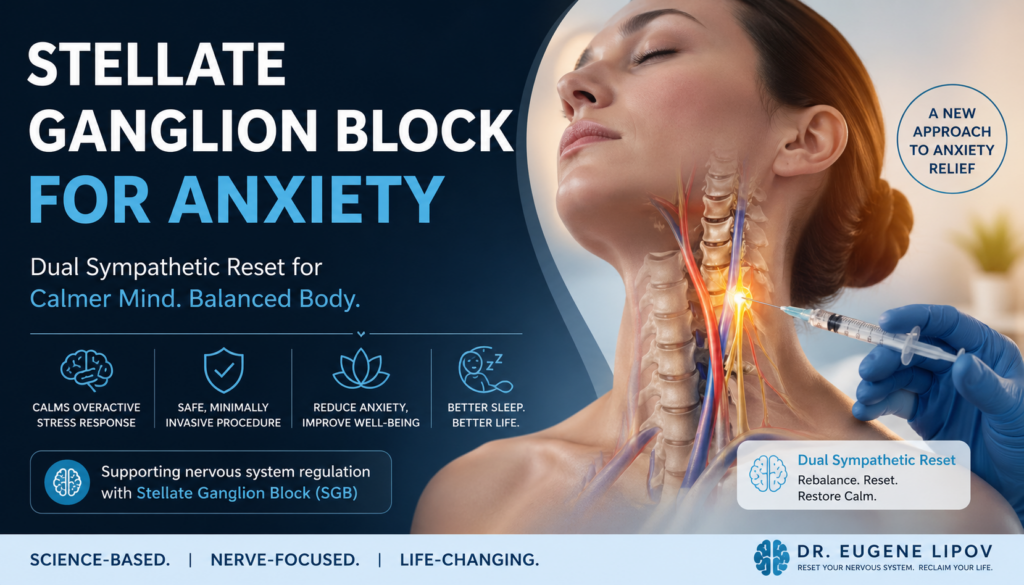
El bloqueo del ganglio estrellado para la ansiedad es un procedimiento médico destinado a calmar un sistema nervioso simpático hiperactivo, que a menudo se asocia con ansiedad crónica y síntomas relacionados con traumas.
En esencia, el bloqueo del ganglio estrellado para la ansiedad actúa sobre un conjunto de nervios ubicados en el cuello que forman parte del sistema de "lucha o huida" del cuerpo. En algunas personas que experimentan estrés crónico o síntomas relacionados con un trauma, este sistema puede permanecer hiperactivo, manteniendo al cuerpo en un estado persistente de alerta máxima incluso cuando no existe un peligro inmediato.
El bloqueo del ganglio estrellado para la ansiedad es un procedimiento mínimamente invasivo, guiado por imágenes, que consiste en una pequeña inyección de anestésico local cerca de este grupo de nervios en el cuello. El objetivo del bloqueo del ganglio estrellado para la ansiedad no es la sedación ni el adormecimiento emocional, sino interrumpir un circuito de retroalimentación desregulado del sistema nervioso que puede estar contribuyendo a los síntomas persistentes de ansiedad e hiperactivación.
Al calmar esta vía de señalización hiperactiva, el bloqueo del ganglio estrellado para la ansiedad puede ayudar a restablecer el equilibrio entre los sistemas nerviosos simpático y parasimpático, permitiendo que el cuerpo salga de un estado constante de lucha o huida.
Puede encontrar más información sobre los antecedentes clínicos de este enfoque en materiales educativos como:
👉 Bloqueo del ganglio estrellado para la recuperación de traumatismos
Es importante dejar esto claro: la SGB no se presenta como un sustituto de la psicoterapia ni de la atención psiquiátrica. Se considera una intervención complementaria, que se explora cuando los síntomas persisten a pesar del tratamiento convencional.
Y para algunos, esa distinción es de suma importancia.
Cómo funciona el reinicio simpático dual
El Reinicio Simpático Dual (DSR, por sus siglas en inglés) es un enfoque ampliado del Bloqueo del Ganglio Estrellado que actúa sobre ambos lados del sistema nervioso simpático para fomentar un estado fisiológico más equilibrado.
El término en sí —Reinicio Simpático Dual— puede sonar casi filosófico. Pero la idea subyacente se basa en la fisiología.
Las respuestas al estrés no son solo experiencias psicológicas. Son reacciones corporales coordinadas que involucran la frecuencia cardíaca, las hormonas, la respiración y la atención. Cuando este sistema se activa de forma crónica, el "botón de reinicio", metafóricamente hablando, puede no funcionar por sí solo.
La DSR se basa en el SGB tradicional, pero aborda este desequilibrio de forma más deliberada, involucrando a veces ambos lados de la cadena simpática, según el criterio clínico.
Aquí encontrará una explicación técnica más detallada del mecanismo:
👉 Cómo funciona SGB – Dr. Eugene Lipov
Aun con diagramas y explicaciones, sigue habiendo algo difícil de plasmar en papel. Los pacientes suelen describir no una transformación drástica, sino un cambio sutil, como si el sistema nervioso finalmente exhalara después de contener la respiración durante demasiado tiempo.
No siempre es inmediato. No siempre es idéntico. Pero se nota de una manera que se siente… diferente.
Por qué la ansiedad es más que “solo una cuestión mental”
La ansiedad, especialmente cuando es crónica, se entiende cada vez más como una afección que afecta a todo el sistema nervioso, y no solo como una experiencia psicológica.
Aquí es donde la conversación en torno a SGB se vuelve más interesante, y también más controvertida.
Los modelos tradicionales de ansiedad se centran en los pensamientos, las conductas y la regulación emocional. Estos aspectos siguen siendo fundamentales. Sin embargo, las nuevas perspectivas también destacan el componente biológico: el sistema nervioso autónomo.
Cuando el sistema simpático permanece hiperactivo, el cuerpo puede comportarse como si el peligro persistiera, incluso en entornos seguros. Esto puede provocar:
- Inquietud persistente
- alteración del sueño
- Hipervigilancia
- Tensión física sin causa aparente
- Dificultad para “desconectar” mentalmente
No es raro que los pacientes digan algo como: “Sé que estoy a salvo… pero mi cuerpo no lo cree.”
Esa brecha —entre la comprensión y la fisiología— es donde se están explorando intervenciones como el SGB.
Para un contexto científico más amplio sobre el trauma y la desregulación autonómica, recursos como el
👉Instituto Nacional de Salud Mental – Trastornos de ansiedad
Ofrece una comprensión fundamental de cómo se manifiesta y se trata la ansiedad.
Beneficios potenciales del bloqueo del ganglio estrellado para la ansiedad
El beneficio potencial del bloqueo del ganglio estrellado en la ansiedad radica en la reducción de la hiperactivación fisiológica, lo que podría permitir que otras terapias sean más efectivas.
Esto no se plantea como una "cura". Esa palabra rara vez se usa en afecciones neurobiológicas complejas.
En cambio, los resultados reportados en la práctica clínica y los estudios emergentes a menudo incluyen:
- Un estado fisiológico basal más tranquilo
- Disminución de la intensidad de las sensaciones de pánico.
- Mejora de la calidad del sueño en algunos pacientes.
- Mayor “espacio” emocional para el trabajo terapéutico.
- Una sensación de tranquilidad interior que antes estaba ausente.
Lo que destaca en muchas conversaciones clínicas no es solo la reducción de los síntomas, sino la accesibilidad. Algunas personas que antes tenían dificultades para participar en la terapia, ahora lo encuentran más fácil.
Dicho esto, las reacciones varían. Algunos notan un cambio significativo. Otros perciben cambios leves o temporales. Y algunos no reaccionan en absoluto.
La medicina, especialmente en el ámbito del sistema nervioso, rara vez se comporta como una línea recta.
Seguridad y efectos secundarios del bloqueo del ganglio estrellado
El bloqueo del ganglio estrellado se considera generalmente un procedimiento de bajo riesgo guiado por imágenes cuando lo realizan especialistas capacitados, pero conlleva posibles efectos secundarios, como cualquier intervención médica.
La seguridad suele ser la principal preocupación, y con razón.
Los efectos secundarios más comunes pueden incluir:
- ronquera temporal
- Caída leve del párpado (síndrome de Horner, generalmente de corta duración).
- Molestias en el lugar de la inyección
- Sensación temporal de entumecimiento o calor
Las complicaciones graves son poco frecuentes, pero posibles en cualquier procedimiento con agujas, por lo que la guía por imágenes y la experiencia clínica son de suma importancia.
En la literatura clínica se analiza una visión general equilibrada de las consideraciones de riesgo, incluidas las investigaciones indexadas en
👉 PubMed – Estudios sobre el bloqueo del ganglio estrellado
Lo que a menudo se pasa por alto en los debates en línea es lo siguiente: la seguridad no solo depende del procedimiento en sí, sino también de la selección del paciente, el entorno clínico y la experiencia del profesional sanitario.
Ese contexto lo cambia todo.
¿Quiénes podrían considerar este enfoque?
El bloqueo del ganglio estrellado puede considerarse para personas con ansiedad persistente o síntomas relacionados con traumas que no han respondido completamente a los tratamientos convencionales.
Esto suele incluir a personas que han intentado:
- Psicoterapia (incluida la terapia centrada en el trauma)
- Medicamentos como los ISRS o los IRSN
- Intervenciones en el estilo de vida y el comportamiento
Y sigo sintiéndome atrapado en un ciclo de estrés fisiológico persistente.
No suele considerarse un tratamiento de primera línea. Más bien, se sitúa en un ámbito más especializado, y a menudo se explora cuando los tratamientos convencionales no han logrado abordar por completo la intensidad biológica de los síntomas.
También existe un importante componente emocional. Muchas personas que buscan este tratamiento no buscan algo "nuevo", sino algo que finalmente se corresponda con lo que experimentan internamente.
El sistema nervioso recuerda
Existe una verdad sutil que tiende a aflorar en este campo con el tiempo.
El sistema nervioso no olvida fácilmente. Se adapta, protege y, a veces, sobreprotege. Lo que en su momento sirvió para la supervivencia puede convertirse en un patrón que perdura mucho después de que haya pasado el estrés inicial.
Enfoques como el bloqueo del ganglio estrellado y el reinicio simpático dual forman parte de un esfuerzo creciente por comprender esa biología de forma más directa, no para reemplazar la curación psicológica, sino para apoyarla.
Para aquellos que estén explorando los próximos pasos o buscando asesoramiento profesional, pueden encontrar más información a través de:
👉 Dr. Eugene Lipov – Sitio oficial
Porque a veces la curación no consiste en obligar a la mente a relajarse.
A veces se trata de ayudar al cuerpo a recordar cómo hacerlo.